
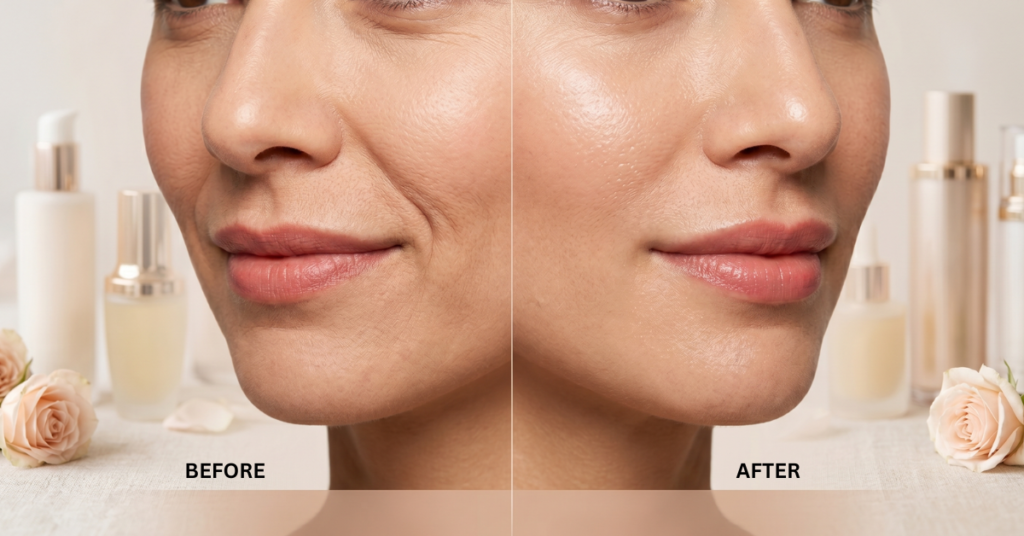
Smile lines, also known as nasolabial folds, are one of the most common signs of facial ageing. They appear as natural creases running from the sides of the nose to the corners of the mouth and often become more noticeable over time due to collagen loss, reduced skin elasticity, and facial volume changes.
The most effective treatments for nasolabial folds in 2026 include hyaluronic acid dermal fillers, collagen-stimulating treatments, medical-grade skincare, radiofrequency microneedling, and personalised combination therapies. The right treatment depends on the depth of the folds, your facial anatomy, skin quality, and aesthetic goals.
At TheBeautyBlessings, we believe that successful facial rejuvenation is about restoring balance rather than changing your appearance. Modern treatments are designed to soften smile lines while preserving natural facial expressions, helping you look refreshed—not overdone.
Key Takeaways
- Smile lines develop naturally as collagen, elastin, and facial volume decline with age.
- Hyaluronic acid dermal fillers remain one of the most effective non-surgical treatments for moderate to deep nasolabial folds.
- Combination treatments often provide longer-lasting and more natural-looking results.
- Early collagen-stimulating treatments may help slow the progression of smile lines.
- A personalised consultation ensures the most appropriate treatment plan for your unique facial structure.
What Are Smile Lines?
Smile lines, medically known as nasolabial folds, are the natural creases extending from each side of the nose to the corners of the mouth.
Although everyone has these folds to some degree, they become deeper and more visible with age as the face gradually loses collagen, elastin, and supporting fat volume. While smile lines are a completely normal part of ageing, many people seek treatment when they begin to make the face appear tired or older than they feel.
Why Do Nasolabial Folds Become More Noticeable?
Several factors contribute to the development of deeper smile lines.
1. Natural Ageing
As we age, collagen and elastin production slow significantly. These proteins are responsible for keeping skin firm, elastic, and resilient.
2. Loss of Facial Volume
The cheeks gradually lose volume over time, allowing the tissues to descend naturally. This downward movement places additional emphasis on the folds around the mouth.
3. Skin Laxity
Reduced skin elasticity makes it more difficult for the skin to bounce back after facial expressions.
4. Sun Exposure
Long-term UV exposure accelerates collagen breakdown, leading to premature ageing and more pronounced facial lines.
5. Lifestyle Factors
Smoking, poor nutrition, dehydration, chronic stress, and inadequate sleep can all contribute to faster skin ageing.
6. Genetics
Some individuals naturally develop deeper nasolabial folds earlier due to inherited facial anatomy and skin characteristics.
Understanding Different Stages of Smile Lines
| Severity | Appearance | Recommended Treatment |
| Mild | Fine lines visible during smiling | Medical-grade skincare, collagen stimulation, skin boosters |
| Moderate | Visible folds even at rest | Dermal fillers, RF microneedling, collagen stimulators |
| Severe | Deep folds with facial volume loss | Combination treatments, dermal fillers, comprehensive facial rejuvenation |
Treating smile lines early often requires less intervention than correcting advanced volume loss.
Best Treatments for Nasolabial Folds in 2026
Modern aesthetic medicine offers several highly effective non-surgical options.
1. Hyaluronic Acid Dermal Fillers
Dermal fillers remain the gold standard for treating moderate to deep nasolabial folds.
Rather than simply filling the crease itself, experienced practitioners assess the entire face to restore lost support in areas such as the cheeks and mid-face. This approach creates softer, more natural-looking results while maintaining normal facial movement.
Benefits
- Immediate improvement
- Minimal downtime
- Natural facial expressions
- Restores lost volume
- Customisable treatment
Results typically last between 6 and 18 months, depending on the product used, individual metabolism, and treatment area.
2. Collagen-Stimulating Treatments
Collagen-stimulating procedures improve skin quality by encouraging the body’s natural repair processes.
These treatments work gradually, strengthening the skin’s internal support structure and improving firmness over time.
Benefits include:
- Improved skin elasticity
- Better texture
- Firmer skin
- Long-term rejuvenation
These treatments are particularly effective for younger patients seeking preventative anti-ageing care.
3. Radiofrequency Microneedling
Radiofrequency microneedling combines controlled skin needling with heat energy to stimulate collagen production deep within the skin.
It can improve:
- Mild smile lines
- Skin laxity
- Fine wrinkles
- Overall skin texture
While it may not replace fillers for significant volume loss, it is an excellent complementary treatment.
4. Skin Boosters
Skin boosters focus on improving hydration and skin quality rather than replacing volume.
These treatments help create smoother, healthier-looking skin and work particularly well alongside fillers.
Benefits include:
- Increased hydration
- Improved skin texture
- Better elasticity
- Enhanced glow
5. Combination Treatments
Many aesthetic practitioners now recommend combining treatments rather than relying on a single procedure.
A personalised treatment plan may include:
- Dermal fillers for volume restoration
- Collagen stimulation for long-term skin health
- Skin boosters for hydration
- Radiofrequency microneedling for tightening
This holistic approach addresses multiple causes of facial ageing and often delivers the most natural-looking outcomes.
Can You Reduce Smile Lines Naturally?
While natural methods cannot eliminate deep nasolabial folds, they may help slow their progression and improve overall skin quality.
Helpful strategies include:
- Daily broad-spectrum sunscreen
- Medical-grade skincare containing retinoids and antioxidants
- Maintaining good hydration
- Eating a nutrient-rich diet
- Avoiding smoking
- Getting adequate sleep
- Maintaining a healthy weight
These measures support healthier skin but generally cannot restore lost facial volume.
Which Treatment Is Right for You?
The ideal treatment depends on several factors, including:
- Age
- Skin quality
- Facial anatomy
- Severity of the folds
- Desired results
- Budget
- Downtime preferences
A comprehensive consultation allows your practitioner to assess facial balance rather than treating smile lines in isolation.
The goal should always be natural enhancement—not an artificial appearance.
What Results Can You Expect?
Immediately After Treatment
- Softer smile lines
- Improved facial contours
- Mild swelling may occur
After 1–2 Weeks
- Fillers settle naturally
- Final results become visible
- Skin appears smoother
Over the Following Months
Collagen-stimulating treatments continue improving skin firmness and elasticity, while healthy skincare helps maintain results.
Are There Any Risks?
All aesthetic treatments carry some level of risk.
Temporary side effects may include:
- Swelling
- Bruising
- Tenderness
- Mild redness
Rare but more serious complications can occur if injectable treatments are performed incorrectly.
Choosing an experienced, qualified practitioner significantly improves both safety and outcomes.
Conclusion
Nasolabial folds are a natural part of facial ageing, but they no longer need to define how you look or feel. Advances in aesthetic medicine have made it possible to soften smile lines with natural-looking, non-surgical treatments that preserve facial expression while restoring youthful balance.
Whether you are considering preventative treatments, collagen stimulation, or dermal fillers, the most successful results come from a personalised treatment plan based on your individual facial anatomy and goals.
At TheBeautyBlessings, we focus on subtle, confidence-boosting enhancements that respect your natural features. By combining clinical expertise with a tailored approach, we help patients achieve refreshed, harmonious results that look like the best version of themselves—not someone else.
Frequently Asked Questions
1. What are nasolabial folds?
Nasolabial folds are the natural creases extending from the sides of the nose to the corners of the mouth. They become more noticeable with age due to collagen loss, reduced skin elasticity, and facial volume changes.
2. What is the best treatment for deep smile lines?
For moderate to severe smile lines, hyaluronic acid dermal fillers remain one of the most effective non-surgical treatments because they restore lost volume while maintaining natural facial movement.
3. Can smile lines disappear naturally?
No. Healthy skincare and lifestyle habits can improve skin quality but cannot replace lost facial volume or eliminate deep folds.
4. How long do smile line fillers last?
Most dermal fillers last between 6 and 18 months, although longevity varies depending on the product used, treatment area, and individual metabolism.
5. Are smile lines and nasolabial folds the same?
Yes. The terms “smile lines” and “nasolabial folds” are commonly used interchangeably to describe the same facial creases.
6. At what age do smile lines usually appear?
Fine smile lines may begin appearing in the late twenties or thirties, while deeper nasolabial folds become more common during the forties and beyond as collagen production declines.
7. Can skincare remove deep smile lines?
Medical-grade skincare can improve skin texture, hydration, and overall quality but cannot replace the structural support lost through ageing. Professional treatments are generally required for deeper folds.