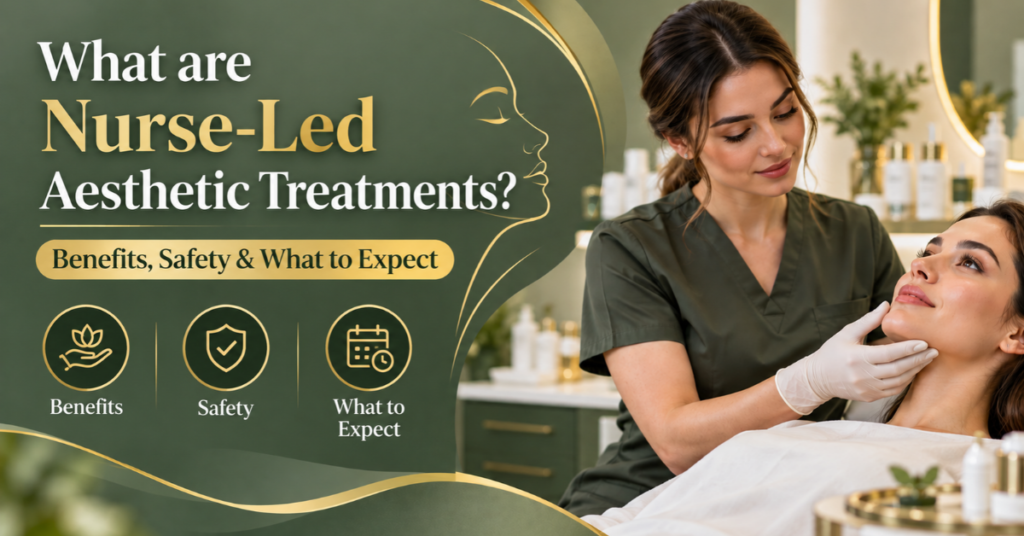
Aesthetic treatments have become increasingly popular for people who want to enhance their natural features without undergoing traditional surgery. But when choosing an aesthetic practitioner, qualifications, clinical knowledge and patient safety are just as important as the treatment itself.
Nurse-led aesthetic treatments are non-surgical cosmetic procedures delivered by appropriately trained nursing professionals, with an emphasis on clinical assessment, personalised treatment planning, patient safety and natural-looking results.
At The Beauty Blessings, our approach to aesthetics is centred around enhancing your natural appearance rather than changing who you are. Every treatment begins with a personalised consultation, allowing your facial features, concerns, medical history and aesthetic goals to be considered before a treatment plan is recommended.
From dermal fillers and wrinkle treatments to skin boosters and other non-surgical procedures, nurse-led aesthetic care can provide a clinically informed and personalised approach to facial aesthetics.
What Are Nurse-Led Aesthetic Treatments?
Nurse-led aesthetic treatments are cosmetic procedures provided by qualified nursing professionals who have undertaken appropriate education, training and competency development for the aesthetic procedures they perform.
The term “nurse-led” describes the clinical background and professional approach of the practitioner. It does not mean that every nurse can automatically perform every aesthetic procedure. The practitioner should have appropriate training, competence, professional indemnity and, where relevant, prescribing authority for the treatment being provided.
Nurse-led aesthetic care can include a range of non-surgical treatments such as:
- Dermal fillers
- Lip augmentation
- Anti-wrinkle treatments
- Cheek, chin and jawline contouring
- Non-surgical rhinoplasty
- Skin boosters
- Profhilo
- Polynucleotides
- PDO threads
- Fat-dissolving treatments
- Other personalised non-surgical aesthetic procedures
The exact treatments available depend on the practitioner’s qualifications, training, scope of practice and clinical assessment.
What Does an Aesthetic Nurse Do?
An aesthetic nurse combines nursing knowledge with specialist aesthetic training to assess clients and deliver suitable cosmetic treatments.
Rather than simply choosing a procedure from a menu, an aesthetic nurse should consider the individual as a whole. This can include discussing your concerns, understanding your desired outcome, assessing facial anatomy and skin condition, reviewing relevant medical information and explaining the available treatment options.
A typical nurse-led approach may involve:
Consultation → Assessment → Treatment Plan → Treatment → Aftercare → Follow-Up
This approach helps ensure that the recommended treatment is based on your individual needs rather than applying the same procedure to every client.
What Treatments Can Be Provided by a Nurse-Led Aesthetic Clinic?
Nurse-led aesthetic clinics can offer a variety of non-surgical treatments, although the exact treatment menu varies between practitioners.
At The Beauty Blessings, treatments include options designed to enhance facial features, improve skin quality and address specific aesthetic concerns.
1. Lip Augmentation
Lip treatments can help enhance lip shape, definition and volume. The aim of a personalised approach is to complement your existing facial proportions and create balanced results.
2. Anti-Wrinkle Treatments
Wrinkle treatments can target specific expression lines, including forehead lines, frown lines and crow’s feet. Treatment planning should take facial movement and individual anatomy into account.
3. Dermal Fillers
Dermal fillers can be used for areas including the lips, cheeks, chin, jawline and nasolabial folds, depending on individual suitability.
They may help restore volume, improve definition or create greater facial balance.
4. Non-Surgical Rhinoplasty
Non-surgical rhinoplasty uses dermal filler to modify the appearance of selected areas of the nose without surgical rhinoplasty.
Because the nose is a highly vascular and anatomically complex area, careful assessment and appropriate practitioner expertise are particularly important.
5. Skin Boosters and Profhilo
Skin-focused injectable treatments can be used to improve hydration, skin quality and the appearance of fine lines.
At The Beauty Blessings, skin treatments include Profhilo and other skin-boosting options tailored to individual concerns.
6. PDO Threads
PDO threads are dissolvable threads placed beneath the skin to provide a lifting effect and stimulate collagen production.
Suitability should be assessed during consultation, particularly where skin laxity, facial anatomy and treatment expectations need to be considered.
7. Fat-Dissolving Treatments
Fat-dissolving treatments may be used to target selected areas of localised fat. They are not intended to replace weight-loss treatment and suitability depends on the individual and treatment area.
What Are the Benefits of Nurse-Led Aesthetic Treatments?
One of the main benefits of nurse-led aesthetics is the combination of clinical experience and personalised cosmetic care.
1. A Clinically Informed Approach
Nursing professionals are trained within a healthcare environment, providing a foundation in areas such as patient assessment, anatomy, health and safety and clinical care.
For aesthetic treatments, this knowledge should be supported by specific training and demonstrated competency in the procedures being performed.
2. Personalised Treatment Planning
Aesthetic treatment should not be approached as a one-size-fits-all service.
Your facial structure, skin condition, previous treatments and desired result can all influence the most appropriate treatment plan.
At The Beauty Blessings, the treatment philosophy focuses on subtle enhancement, balance and maintaining your individuality.
3. Greater Focus on Patient Assessment
A proper consultation provides an opportunity to discuss your medical history, expectations, treatment suitability, potential risks and aftercare requirements before treatment takes place.
This is particularly important for injectable treatments.
4. Understanding of Facial Anatomy
Many injectable aesthetic treatments involve structures beneath the skin, including blood vessels, nerves and muscles.
An understanding of facial anatomy is therefore an important part of safe aesthetic practice.
5. Natural-Looking Results
A nurse-led approach does not automatically guarantee a particular aesthetic outcome, but a personalised treatment plan can help ensure that the amount, placement and type of treatment are considered in relation to your individual features.
At The Beauty Blessings, the focus is on subtle, balanced and natural-looking results.
6. Patient Education and Aftercare
Good aesthetic care does not end when the procedure is completed.
You should understand what to expect after treatment, which side effects can be normal, what aftercare is recommended and when you should contact your practitioner.
Are Nurse-Led Aesthetic Treatments Safe?
Nurse-led aesthetic treatments can be carried out safely when performed by an appropriately qualified, trained and competent practitioner using suitable products, appropriate clinical assessment and proper infection-control and aftercare procedures. However, non-surgical does not mean risk-free.
All cosmetic procedures have potential risks, and the level of risk varies depending on the treatment, product, treatment area and individual circumstances.
Potential side effects of injectable aesthetic treatments can include:
- Redness
- Swelling
- Bruising
- Tenderness
- Temporary discomfort
- Lumps or unevenness
- Infection
- Allergic reactions
- Other treatment-specific complications
Some injectable treatments can also have rare but serious complications. This is why choosing an appropriately trained practitioner and having a proper consultation is important.
Your practitioner should explain the relevant risks and benefits before treatment and ensure that you have enough information to make an informed decision.
Why Is a Consultation Important Before Aesthetic Treatment?
A consultation is more than simply deciding which treatment you want.
It is an opportunity for your practitioner to determine whether a treatment is appropriate for you and whether your desired outcome is realistic.
During your consultation, you may discuss:
1. Your Aesthetic Goals
What would you like to change or enhance?
For example, you may want more lip definition, improved facial balance, softer lines or better skin quality.
2. Your Medical History
Relevant health information, medication and previous procedures can affect treatment suitability.
Your practitioner should have the opportunity to identify factors that could increase treatment risks or affect your results.
3. Your Facial Anatomy and Skin
Different faces respond differently to treatment.
Assessment can help determine where treatment may be appropriate and whether a particular procedure is suitable.
4. Your Expectations
A good consultation should include an honest discussion about what treatment can and cannot achieve.
Sometimes the most appropriate recommendation may be a different treatment—or no treatment at all.
5. Risks and Aftercare
You should have the opportunity to understand potential side effects, expected recovery, aftercare and when to seek additional advice.
What Should You Expect from a Nurse-Led Aesthetic Treatment?
Although every procedure is different, your aesthetic journey will generally involve several stages.
Step 1: Consultation
Your treatment starts with a discussion about your concerns, goals and expectations.
A clinical assessment is then used to determine whether treatment is appropriate.
Step 2: Personalised Treatment Plan
Your practitioner explains the available options and recommends a treatment approach based on your individual needs.
You should have the opportunity to ask questions before making a decision.
Step 3: Treatment
If treatment is considered appropriate and you choose to proceed, the procedure will be carried out using the technique and products selected for your treatment plan.
Step 4: Immediate Aftercare
Your practitioner should explain what to expect immediately after treatment and provide relevant aftercare instructions.
Step 5: Recovery and Results
Some treatments produce an immediately visible change, while others develop progressively.
Temporary swelling, redness or bruising may occur depending on the procedure.
Step 6: Follow-Up
Depending on the treatment, a review or follow-up appointment may be recommended.
Follow-up provides an opportunity to assess your results and discuss any concerns.
How Do You Choose a Nurse-Led Aesthetic Practitioner?
Choosing an aesthetic practitioner is an important part of your treatment decision.
Before booking, consider the following questions:
Is the practitioner a registered nurse?
You can check a nurse’s registration using the Nursing and Midwifery Council (NMC) register.
Does the practitioner have specific aesthetic training?
A nursing qualification alone should not be considered equivalent to specialist training in every aesthetic procedure.
Ask about the practitioner’s relevant aesthetic education, training and experience.
Do they assess you properly before treatment?
A thorough consultation should form an important part of the treatment process.
Do they clearly explain risks?
Be cautious of providers who present aesthetic procedures as completely risk-free.
A responsible practitioner should explain both expected benefits and potential risks.
Do they provide aftercare?
Ask what support is available following treatment and who you can contact if you have concerns.
Do the results match your aesthetic goals?
Look for a practitioner whose treatment philosophy aligns with what you want.
If your goal is subtle enhancement, discuss this clearly during the consultation.
What Is the Difference Between a Nurse-Led Aesthetic Clinic and a Beauty Clinic?
The terminology can sometimes be confusing because the aesthetics sector includes practitioners with different professional backgrounds.
A nurse-led clinic is led by a qualified nursing professional, whereas a beauty clinic may offer services delivered by beauty therapists or other practitioners depending on their training and scope of practice.
The important point is not simply the label used by a clinic. You should understand who is providing your treatment, what qualifications and training they have, what treatment they are authorised and competent to perform, and what clinical support and aftercare are available.
Nurse-Led Aesthetics vs Other Non-Surgical Aesthetic Treatments
| Consideration | What to look for |
| Practitioner | Appropriate professional registration and aesthetic training |
| Consultation | Detailed assessment before treatment |
| Treatment plan | Personalised rather than one-size-fits-all |
| Product | Appropriate, reputable and suitable for the treatment |
| Safety | Clear explanation of risks and contraindications |
| Consent | Informed consent before treatment |
| Aftercare | Clear instructions and access to support |
| Results | Realistic expectations and treatment goals |
| Follow-up | Appropriate review where required |
What Are the Risks of Injectable Aesthetic Treatments?
Injectable treatments require particular care because needles and injectable products can affect tissues beneath the skin.
Depending on the procedure, complications can include bruising, swelling, infection, nodules, asymmetry or other treatment-specific effects.
Dermal filler treatments also have rare but potentially serious complications, including vascular complications.
The risk profile varies by treatment area. Areas such as the nose and under-eye region require particularly careful assessment because of their anatomy.
This is one reason why consultation, practitioner training, appropriate product selection and emergency planning are important considerations when choosing an aesthetic clinic.
Is Nurse-Led Aesthetics Right for Everyone?
No aesthetic treatment is automatically suitable for everyone.
Your practitioner may recommend delaying or avoiding a procedure depending on factors such as your health, medication, previous treatments, allergies, pregnancy or breastfeeding status, skin condition or other individual circumstances.
The purpose of a consultation is to determine suitability rather than assume that every client is a candidate for treatment.
A responsible practitioner should be comfortable recommending against a procedure where it is not appropriate.
Nurse-Led Aesthetic Treatments at The Beauty Blessings
At The Beauty Blessings, our philosophy is built around one principle:
Aesthetic treatments should enhance your natural beauty—not change who you are.
Our nurse-led approach combines clinical knowledge with personalised aesthetic care, with an emphasis on facial harmony, subtle enhancement, and individual treatment planning.
Our treatments include options such as:
- Lip augmentation
- Dermal fillers
- Non-surgical rhinoplasty
- Chin filler
- Cheek contouring
- Jawline filler
- Tear trough filler
- Lines and wrinkle treatments
- Profhilo
- Skin boosters
- Polynucleotides
- PDO threads
- Fat-dissolving treatments
- Other personalised aesthetic treatments
Every treatment journey begins with consultation and assessment so that your individual goals and suitability can be considered.
Your Next Step
Choosing an aesthetic treatment should start with information, not pressure.
At The Beauty Blessings, every treatment begins with a personalised consultation so you can discuss your goals, understand your options and make an informed decision about your care.
Ready to explore nurse-led aesthetic treatments?
Book Your Free Consultation with The Beauty Blessings and discover a personalised approach to natural-looking aesthetic results.
Book Your Free Consultation | Explore Our Treatments | View Treatment Pricing
The Beauty Blessings — Nurse-Led Aesthetic Care Focused on Natural Results
Frequently Asked Questions About Nurse-Led Aesthetic Treatments
1. What are nurse-led aesthetic treatments?
Nurse-led aesthetic treatments are non-surgical cosmetic procedures delivered by appropriately trained nursing professionals. They can include treatments such as dermal fillers, wrinkle treatments, skin boosters and other aesthetic procedures depending on the practitioner’s qualifications, training and scope of practice.
2. Are nurse-led aesthetic treatments safe?
Nurse-led aesthetic treatments can be performed safely when provided by an appropriately trained and competent practitioner using suitable products, clinical assessment, informed consent and appropriate aftercare. However, aesthetic procedures are not completely risk-free and potential complications vary by treatment.
3. What does an aesthetic nurse do?
An aesthetic nurse assesses clients, discusses their aesthetic goals, evaluates treatment suitability, creates personalised treatment plans and performs procedures within their training and scope of practice. They should also provide appropriate consent information and aftercare.
4. What is the benefit of seeing a nurse for aesthetic treatment?
A nurse-led approach combines nursing knowledge with specific aesthetic training. This can support a clinically informed approach to assessment, anatomy, patient safety, treatment planning and aftercare.
5. Can nurses perform dermal filler treatments?
A nurse may provide dermal filler treatments where they have appropriate training, competence and professional arrangements to do so. The specific treatment and prescribing requirements depend on the products and procedures involved.
6. What treatments are available at The Beauty Blessings?
The Beauty Blessings offers a range of non-surgical aesthetic treatments, including lip augmentation, dermal fillers, non-surgical rhinoplasty, chin and cheek contouring, wrinkle treatments, Profhilo, skin boosters, PDO threads and fat-dissolving treatments.
7. What happens during an aesthetic consultation?
Your practitioner discusses your concerns, goals and expectations, assesses suitability and explains relevant treatment options, potential benefits, risks and aftercare. A personalised plan can then be created where appropriate.
8. How do I know whether an aesthetic treatment is right for me?
The most appropriate treatment depends on your individual anatomy, skin condition, medical history, goals and expectations. A professional consultation is the best way to determine suitability.
9. How long do nurse-led aesthetic treatment results last?
There is no single duration for all nurse-led aesthetic treatments. Longevity depends on the procedure, product, treatment area and individual factors. Your practitioner should explain the expected duration during your consultation.
10. Is there downtime after nurse-led aesthetic treatments?
Downtime varies by procedure. Some non-surgical treatments have minimal downtime, while swelling, redness, bruising or tenderness may occur temporarily following injectable procedures. Your practitioner should provide treatment-specific aftercare advice.
11. How can I choose an aesthetic nurse?
Check the practitioner’s professional registration where applicable, ask about their specific aesthetic training and experience, and make sure they provide a detailed consultation, explain risks and offer appropriate aftercare.
12. Can aesthetic treatments look natural?
Yes. Aesthetic treatments can be planned to create subtle changes that complement your existing features. At The Beauty Blessings, natural-looking results and facial harmony are central to the treatment philosophy.