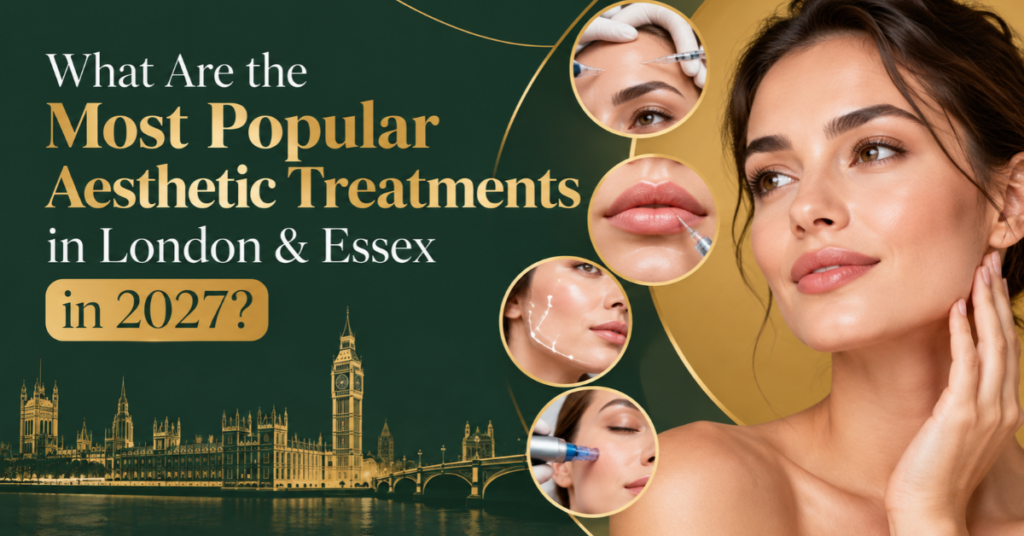
Aesthetic treatments continue to attract people who want to refresh their appearance, improve their skin quality or explore non-surgical ways to enhance their natural features. As we look towards 2027, personalisation, natural-looking results and informed treatment choices remain important considerations for anyone researching aesthetic treatments in London and Essex.
From anti-wrinkle treatments and dermal fillers to skin boosters and polynucleotides, there are several options to explore. However, a treatment that is suitable for one person may not be appropriate for another.
At The Beauty Blessings, our approach to aesthetics focuses on understanding your individual concerns, discussing suitable options and helping you make an informed decision. This guide explains some of the aesthetic treatments people commonly research, what they are designed to address and what to consider before choosing a procedure.
Quick answer: What aesthetic treatments are popular in London and Essex?
Commonly sought aesthetic treatments include anti-wrinkle injections, dermal fillers, lip augmentation, skin rejuvenation, Profhilo, skin boosters and polynucleotide treatments. Their popularity does not establish that they are suitable for everyone. The right option depends on your concerns, medical history, treatment goals, and professional assessment.
1. Skin Rejuvenation Treatments
Skin rejuvenation is a broad term for treatments intended to improve aspects of skin appearance, such as texture, uneven tone or the appearance of fine lines. The appropriate approach depends on the concern being addressed and the condition of your skin.
Options may include microneedling, selected chemical peels and other skin-focused procedures. These treatments are not interchangeable, and their benefits, recovery periods and risks vary.
Microneedling
Microneedling uses fine needles to create controlled micro-injuries in the skin. Depending on the device, treatment protocol and individual, it may be considered for concerns such as uneven texture or the appearance of certain scars.
A practitioner should explain the expected results, number of sessions, recovery and potential complications. Microneedling is not suitable for every skin condition.
Chemical peels
Chemical peels use specific solutions to exfoliate the skin. The type and strength of the peel influence its intended effect, recovery time and risk profile.
Before treatment, ask about the ingredients, depth of the peel, suitability for your skin and the aftercare required. More intensive peels require particularly careful assessment.
Who might consider skin rejuvenation? Someone concerned about skin texture, tone or certain signs of ageing may wish to explore skin-focused treatments. A consultation can help establish whether a procedure is appropriate or whether a different approach would be more suitable.
2. Anti-Wrinkle Treatments
Anti-wrinkle injections are commonly discussed in relation to expression lines, including certain lines associated with frowning or squinting.
These treatments work by temporarily affecting targeted muscle activity. They are different from dermal fillers, which add volume or structure to selected areas.
The medicine used, treatment area, expected duration, possible side effects and suitability should all be discussed with an appropriately qualified healthcare professional.
In the UK, botulinum toxin products used for cosmetic treatment are prescription-only medicines. A consultation and appropriate clinical assessment are important before treatment.
If you are researching anti-wrinkle treatments in London or Essex, ask who will assess you, who will prescribe and administer the medicine, and what follow-up arrangements are available.
3. Dermal Fillers and Lip Augmentation
Dermal fillers are injectable products that may be used to add volume or structure to selected facial areas. Depending on the product and treatment plan, they may be considered for the lips, cheeks, chin or jawline.
Lip augmentation is one example of a filler treatment. The aim may be to alter lip volume, shape or definition, but the result should be planned around individual facial proportions and expectations.
Fillers are medical procedures and can cause complications, including rare but serious ones. Ask about the specific product, practitioner experience, potential risks, alternatives and what happens if a complication occurs.
A consultation should establish whether filler is suitable for your concern. More product does not automatically mean a better outcome.
4. Profhilo, Skin Boosters and Polynucleotides
Skin-focused injectable treatments have received considerable attention from people interested in hydration and overall skin quality. However, different products have different formulations, intended uses and evidence bases.
Profhilo and hyaluronic acid skin boosters
Profhilo is an injectable hyaluronic-acid-based treatment commonly discussed in relation to skin quality. Other skin boosters may have different formulations and indications.
These treatments should not automatically be considered equivalent to conventional dermal fillers. The intended outcome, treatment protocol and suitability depend on the particular product.
Polynucleotides
Polynucleotide treatments are another category of injectable treatment marketed for skin-quality concerns. Evidence, product composition, approved or permitted uses and clinical suitability should be considered carefully.
When researching polynucleotides in London or Essex, ask the practitioner which product is being used, what evidence supports the proposed use, what results are realistic and what risks or uncertainties remain.
Are polynucleotides better than Profhilo?
Neither treatment is universally better. They differ in formulation and intended use, and the evidence and suitability depend on the specific product and concern. A qualified practitioner can explain the options without assuming that a trending treatment is necessarily the best one.
5. Non-Surgical Skin Tightening
Some energy-based devices, including certain radiofrequency or ultrasound technologies, are used in aesthetic practice to address selected skin concerns.
The effects depend on the device, treatment settings, individual characteristics and the concern being treated. Outcomes are not guaranteed, and multiple sessions may be recommended for some procedures.
Before considering non-surgical skin tightening, ask:
- What device and technology will be used?
- What is the evidence for the proposed treatment?
- What results are realistic for my concern?
- How many sessions may be needed?
- What are the possible side effects and recovery requirements?
A clinic should explain the limitations of the treatment as well as its potential benefits.
6. Facial Contouring and Other Non-Surgical Treatments
People researching aesthetic treatments may also be interested in lip augmentation, cheek contouring, chin filler, jawline filler or non-surgical nose correction.
These procedures address different concerns and should not be grouped together as if they produce the same result. Their suitability depends on individual anatomy, the treatment product or technique, and the practitioner’s assessment.
The Beauty Blessings lists a range of facial aesthetic treatments. You can explore the clinic’s aesthetic treatments in Brentwood and aesthetic clinic information for Chelmsford to learn more about its services.
Treatment availability, suitability and pricing should be confirmed directly with the clinic.
7. How to Choose the Right Aesthetic Treatment
The most suitable treatment is not necessarily the newest, most popular or most heavily promoted option. It should be chosen according to your concern, individual circumstances and a professional assessment.
Before deciding, consider the following:
Identify your main concern
Are you interested in expression lines, facial volume, lip definition, skin texture or another concern? Knowing what you want to address helps make the consultation more useful.
Understand the treatment
Ask how the procedure works, what it is intended to achieve, how long results may last and whether more than one session may be needed.
Check practitioner qualifications and experience
Ask about relevant qualifications, training, experience with the particular procedure and professional registration where applicable. Confirm who is responsible for prescribing and administering any prescription-only medicine.
Discuss risks and alternatives
Every procedure has potential risks. You should receive information about possible complications, aftercare, recovery and alternative options before giving informed consent.
Avoid choosing on price alone
Compare the consultation process, practitioner expertise, treatment information and aftercare as well as the advertised price. A low price is not evidence of suitability or quality.
8. Why Personalised Aesthetic Care Matters in 2027
Aesthetic care should begin with the person, not the procedure.
Two people may have similar concerns but different facial anatomy, medical histories, expectations or treatment needs. An individual consultation allows these differences to be considered before a treatment recommendation is made.
At The Beauty Blessings, our approach centres on personalised care and natural-looking enhancement. We encourage clients to understand their options, ask questions and consider the potential benefits and risks before making a decision.
Whether you are exploring medical aesthetics in London or researching aesthetic treatments in Essex, a consultation should help you understand what a treatment can realistically achieve—and when it may not be the right choice.
Conclusion: Explore Aesthetic Treatments with Informed Advice
Anti-wrinkle treatments, dermal fillers, skin rejuvenation, skin boosters and polynucleotides are among the options people commonly research when exploring non-surgical aesthetics.
However, popularity alone should not determine your treatment choice. The most appropriate option depends on your individual goals, skin or facial concerns, medical circumstances and professional assessment.
At The Beauty Blessings, we believe that informed decisions, realistic expectations and appropriate clinical care are essential to the aesthetic treatment journey.
If you are considering a treatment, you can contact The Beauty Blessings to enquire about a consultation and discuss your options.
Frequently Asked Questions
1. What are the most popular aesthetic treatments in London?
Commonly sought treatments include anti-wrinkle injections, dermal fillers, lip augmentation and skin-focused procedures such as microneedling and skin boosters. Popularity varies by clinic and individual goals. A consultation is needed to determine which treatments, if any, are suitable.
2. What aesthetic treatments are trending in 2027?
Personalised treatment planning, skin-quality procedures and non-surgical approaches are likely to remain topics of interest in 2027. Trends can change, and popularity does not establish safety, effectiveness or suitability. Check the evidence and product information before choosing a treatment.
3. Are polynucleotides popular in London and Essex?
Polynucleotides have attracted interest in aesthetic practice for their proposed skin-quality applications. The evidence, product formulation, intended use and suitability should be assessed individually. Ask a qualified practitioner about the specific product and the limitations of available evidence.
4. What is the difference between anti-wrinkle injections and dermal fillers?
Anti-wrinkle injections affect targeted muscle activity and are used for selected expression lines. Dermal fillers add volume or structure to particular areas. They work differently and are not interchangeable; the appropriate option depends on the concern being assessed.
5. Which aesthetic treatments may help improve skin quality?
Depending on the concern, options may include microneedling, selected chemical peels, Profhilo or other skin boosters, and polynucleotide treatments. Their effects, evidence and risks vary. A professional assessment can help identify an appropriate option.
6. How do I choose an aesthetic clinic in London or Essex?
Check the practitioner’s relevant qualifications, training, experience, professional registration where applicable, consultation process, product information and aftercare. Ask about risks, complications and how concerns are managed. Do not choose a clinic solely on price or social media popularity.
7. Are non-surgical aesthetic treatments risk-free?
No. Non-surgical treatments can still cause side effects and complications, some of which may be serious. Risks vary by procedure and individual. Ask about the specific risks, alternatives, recovery and aftercare before deciding whether to proceed.
8. Do I need a consultation before aesthetic treatment?
A consultation is an important part of assessing suitability and making an informed decision. It should cover your goals, relevant medical information, treatment options, expected outcomes, potential risks and aftercare. Prescription-only treatments require appropriate prescribing and clinical assessment.