
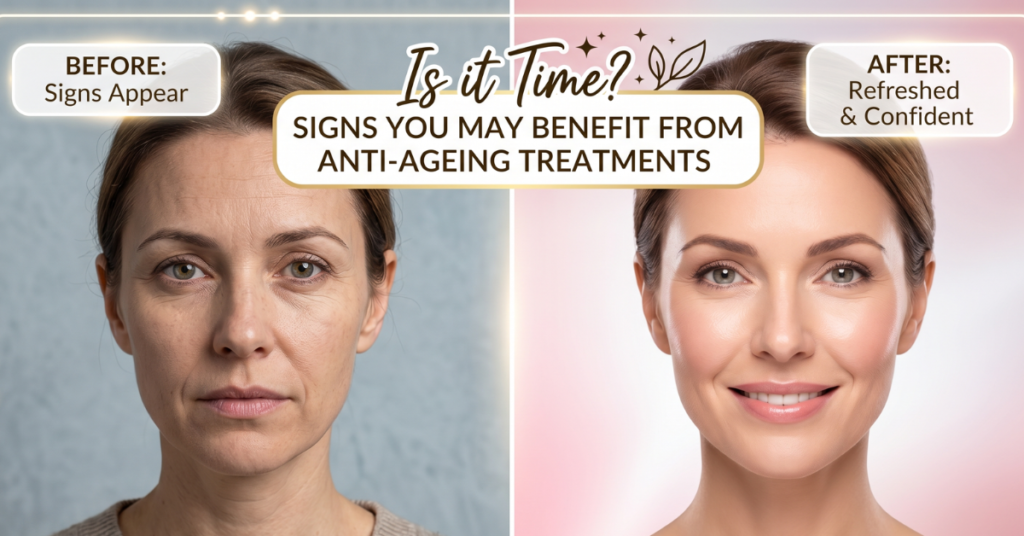
Ageing is a natural part of life, but changes in the skin can sometimes leave you looking more tired, dull, or less refreshed than you feel. Fine lines, dehydration, reduced skin elasticity, and volume loss often appear gradually, making them easy to overlook in the early stages.
Modern anti-ageing treatments are no longer about dramatically changing your appearance. Instead, professional aesthetic treatments focus on subtle, natural-looking rejuvenation that helps you look refreshed while still looking like yourself.
Understanding the early signs of skin ageing can help you decide when preventative or corrective treatments may be beneficial. In many cases, addressing concerns early leads to softer, more natural results and can help maintain healthy, radiant skin over time.
Signs You May Benefit from Anti-Ageing Treatments
Some of the most common early signs of facial ageing include:
- Fine lines that remain visible at rest
- Dull or dehydrated skin
- Reduced skin elasticity
- Loss of facial volume
- Tired-looking eyes or skin
- Deepening wrinkles around areas of movement
- Changes in skin texture or firmness
These changes are often linked to declining collagen production, reduced hydration, sun exposure, lifestyle factors, and the natural ageing process.
1. Fine Lines That Don’t Fade Easily
Fine lines are often one of the earliest visible signs of skin ageing. They commonly appear around the eyes, forehead, and mouth, especially in areas where the face naturally moves during smiling, laughing, or frowning.
At first, these lines may only appear during facial expressions. Over time, however, they can begin to remain visible even when the face is relaxed.
Why It Happens
As we age, the skin gradually produces less collagen and elastin. This causes the skin to lose firmness, hydration, and elasticity, making expression lines more noticeable.
External factors such as:
- sun exposure
- dehydration
- smoking
- stress
- lack of sleep
can also accelerate the development of fine lines.
Treatments That May Help
Depending on your skin concerns, professional anti-ageing treatments may include:
- anti-wrinkle injections
- skin boosters
- medical-grade skincare
- collagen-stimulating treatments
- hydration therapies
These treatments are designed to soften lines while maintaining natural facial movement and expression.
When to Consider Professional Advice
If fine lines remain visible even when your face is at rest, it may be time to consider a professional skin consultation. Early treatment often produces the most subtle and preventative results.
2. Loss of Skin Radiance and Hydration
Skin that once looked bright and healthy may begin to appear dull, dry, or uneven with age. Many people notice that their skin no longer reflects light the way it once did or feels less smooth and plump than before.
This is one of the most common early signs of ageing skin.
Why It Happens
Ageing skin naturally retains less moisture and produces fewer natural oils. Reduced cell turnover can also leave the complexion looking tired or rough.
Environmental stressors such as pollution, UV exposure, and poor skincare habits can further weaken the skin barrier and contribute to dehydration.
Treatments That May Help
Professional skin rejuvenation treatments may help restore hydration and improve overall skin quality, including:
- skin boosters
- hydrating facials
- microneedling
- collagen induction therapies
- medical-grade skincare products
These treatments aim to improve texture, hydration, and radiance without creating an overdone appearance.
Signs It May Be Time for Treatment
You may benefit from professional support if:
- your skin constantly feels dry
- makeup no longer sits smoothly
- your complexion appears tired or flat
- skincare products no longer seem effective
3. Subtle Volume Loss Around the Face
Facial volume naturally decreases with age, particularly around the cheeks, temples, and under-eye area. This can create a hollow, shadowed, or tired appearance even when you feel well-rested.
Volume loss is often one of the earliest structural changes associated with facial ageing.
Why It Happens
Collagen, fat pads, and bone density gradually decline over time. As support structures weaken, the face may begin to lose fullness and definition.
This process can affect:
- cheek contour
- under-eye hollowness
- jawline definition
- skin firmness
Treatments That May Help
Depending on the level of volume loss, treatment options may include:
- dermal fillers
- collagen-stimulating injectables
- skin tightening treatments
- regenerative skin therapies
The goal should always be balanced, natural-looking enhancement rather than excessive volume.
Why Early Treatment Matters?
Addressing volume loss early often allows for more subtle correction and better long-term facial balance.
4. Fine Lines Turning into Deeper Wrinkles
Over time, repeated facial movement and collagen breakdown can cause fine lines to deepen into more permanent wrinkles.
This commonly affects:
- forehead lines
- crow’s feet
- frown lines
- smile lines
Wrinkles that remain visible at rest are usually a sign that the skin’s support structure has weakened further.
Why It Happens
Ageing reduces the skin’s ability to repair itself efficiently. Collagen depletion, repetitive muscle movement, and sun damage all contribute to deeper wrinkles forming.
Treatments That May Help
Anti-ageing treatments for deeper wrinkles may include:
- anti-wrinkle injections
- skin resurfacing
- collagen stimulation
- combination rejuvenation treatments
Professional treatment can soften the appearance of wrinkles while preserving natural facial movement and expression.
Preventative vs Corrective Treatments
Preventative treatments aim to slow the development of wrinkles before they become deeply established, while corrective treatments focus on reducing visible lines that are already present.
Both approaches can achieve natural-looking results when performed conservatively and professionally.
5. Skin Looks Tired Even After Rest
One of the most overlooked signs of skin ageing is looking persistently tired despite getting enough sleep, staying hydrated, or maintaining a healthy lifestyle.
Many people notice:
- darker under-eye areas
- reduced skin brightness
- sagging around the eyes
- overall facial fatigue
Why It Happens
This often reflects deeper structural and textural changes within the skin, including:
- reduced collagen production
- thinning skin
- dehydration
- volume loss
- reduced circulation
Treatments That May Help
Professional aesthetic treatments may help restore a fresher appearance through:
- under-eye rejuvenation
- hydration treatments
- skin tightening
- collagen stimulation
- personalised skincare plans
The best results typically come from subtle treatments tailored to your facial anatomy and skin condition.
What Causes Premature Skin Ageing?
While natural ageing is unavoidable, certain factors can accelerate visible skin ageing.
Common causes include:
- excessive sun exposure
- smoking
- dehydration
- stress
- poor sleep
- pollution
- lack of skincare protection
- reduced collagen production
- poor nutrition
Protecting the skin early with good skincare habits and preventative treatments can help maintain healthier skin for longer.
When Should You Start Anti-Ageing Treatments?
There is no “perfect” age to begin anti-ageing treatments. Many people start preventative treatments in their late 20s or early 30s, while others only seek treatment once visible changes become more noticeable.
The right time depends on:
- your skin condition
- genetics
- lifestyle
- sun exposure
- personal goals
A professional consultation can help determine which treatments, if any, are appropriate for your skin concerns.
Are Natural-Looking Results Possible?
Modern aesthetic treatments are increasingly focused on subtle enhancement rather than dramatic transformation.
When performed correctly, anti-ageing treatments should:
- preserve natural facial movement
- enhance skin quality
- restore balance and hydration
- soften lines without looking artificial
- help you look refreshed rather than “done”
Choosing experienced medical professionals and personalised treatment plans is essential for achieving balanced, natural-looking outcomes.
Key Takeaways
- Fine lines, dullness, dehydration, and volume loss are common early signs of skin ageing.
- Early intervention often creates softer and more natural-looking results.
- Preventative treatments can help maintain collagen, hydration, and skin quality over time.
- Modern anti-ageing treatments focus on subtle rejuvenation rather than dramatic change.
- A professional consultation can help determine the most suitable treatment approach for your individual skin concerns.
Frequently Asked Questions
1. What are the first signs of skin ageing?
The first signs of skin ageing often include fine lines, dehydration, dullness, uneven skin texture, and mild loss of elasticity. These changes usually develop gradually as collagen production naturally declines over time.
2. How do I know if I may benefit from anti-ageing treatments?
You may benefit from anti-ageing treatments if you notice persistent fine lines, dull or tired-looking skin, volume loss, or wrinkles becoming more visible at rest. A professional consultation can help assess your skin concerns and recommend suitable treatment options.
3. What age should you start anti-ageing treatments?
There is no fixed age to begin anti-ageing treatments. Many people consider preventative treatments in their late 20s or early 30s, while others begin later depending on their skin concerns, genetics, and lifestyle factors.
4. Are anti-ageing treatments safe?
When performed by qualified and experienced medical professionals, anti-ageing treatments are generally considered safe. Choosing a reputable clinic and receiving a personalised consultation is important for achieving safe, natural-looking results.
5. What treatments help with fine lines and wrinkles?
Common treatments for fine lines and wrinkles include anti-wrinkle injections, skin boosters, collagen stimulation therapies, microneedling, and medical-grade skincare. The most appropriate option depends on your skin condition and desired outcome.
6. Can anti-ageing treatments still look natural?
Yes. Modern aesthetic treatments are designed to create subtle, refreshed results while preserving natural facial expression and balance. Conservative treatment plans often achieve the most natural appearance.